What Happened At Cornell University 2026 Sparks Global Academic Shifts
Table of Contents
- Historical Context and Background of Cornell University
- Founding Principles and Core Values Established by Ezra Cornell and Andrew Dickson White
- Timeline of Major Historical Events at Cornell University
- Anticipated Academic and Research Developments by 2026
- Cutting-Edge Research Projects and Breakthrough Discoveries
- Academic Controversies and Ethical Debates
- Interdisciplinary Initiatives Driving Innovation
- Global Partnerships Shaping Cornell’s Academic Direction
- Research Funding Landscape and Allocation Priorities
- Student Life and Campus Dynamics in 2026: A Transformative Era at Cornell
- Student Activism and Protests: Free Speech, Justice, and Administrative Tensions
- Evolution of Student Organizations: Inclusivity, Decline of Traditions, and Rise of Niche Communities
- Housing, Dining, and Facilities: Sustainability, Smart Tech, and Controversial Upgrades
- Notable Alumni and Their Influence by 2026
- Cornell Alumni Poised for Milestones by 2026
- Alumni-Driven External Influence and Industry Disruptions
- Controversies and Ethical Dilemmas Among Cornell Alumni by 2026
Cornell University in 2026 stands at the precipice of transformative change, where historical legacy meets cutting-edge innovation. Founded on principles of accessibility and excellence by Ezra Cornell and Andrew Dickson White in 1865, the institution has long balanced tradition with progress, from pioneering agricultural science to shaping modern technology. Yet by 2026, its evolution is accelerating—driven by groundbreaking research, student activism reshaping campus culture, and alumni whose influence extends beyond academia into global leadership.
The year promises to redefine Cornell’s role in higher education, as controversies over free speech and ethical research collide with advancements in AI and biotechnology. Meanwhile, campus life is undergoing a quiet revolution, with sustainability initiatives, mental health reforms, and student-led movements pushing boundaries. From hypothetical scientific breakthroughs to potential alumni milestones, 2026 could cement Cornell’s legacy as a harbinger of change in both education and society.

Historical Context and Background of Cornell University
Cornell University, founded in 1865, stands as a testament to the vision of Ezra Cornell and Andrew Dickson White, who sought to create an institution that would democratize higher education while fostering innovation and public service. Their principles—“I would found an institution where any person can find instruction in any study”—laid the foundation for Cornell’s unique blend of academic rigor, practical learning, and social responsibility. By 2026, these core values continue to shape the university’s trajectory, influencing its response to modern challenges such as technological disruption, ethical dilemmas in research, and evolving societal expectations for higher education. The university’s legacy is marked by a series of transformative milestones, from its early emphasis on applied sciences to its current status as a global leader in research and interdisciplinary collaboration. Cornell’s evolution reflects broader shifts in higher education, including its transition from a land-grant institution to an Ivy League powerhouse, a distinction earned in 1933. This historical context is crucial to understanding how Cornell’s past informs its present and future, particularly in 2026, when the university faces unprecedented opportunities and pressures to redefine its role in education, industry, and public policy.
Founding Principles and Core Values Established by Ezra Cornell and Andrew Dickson White
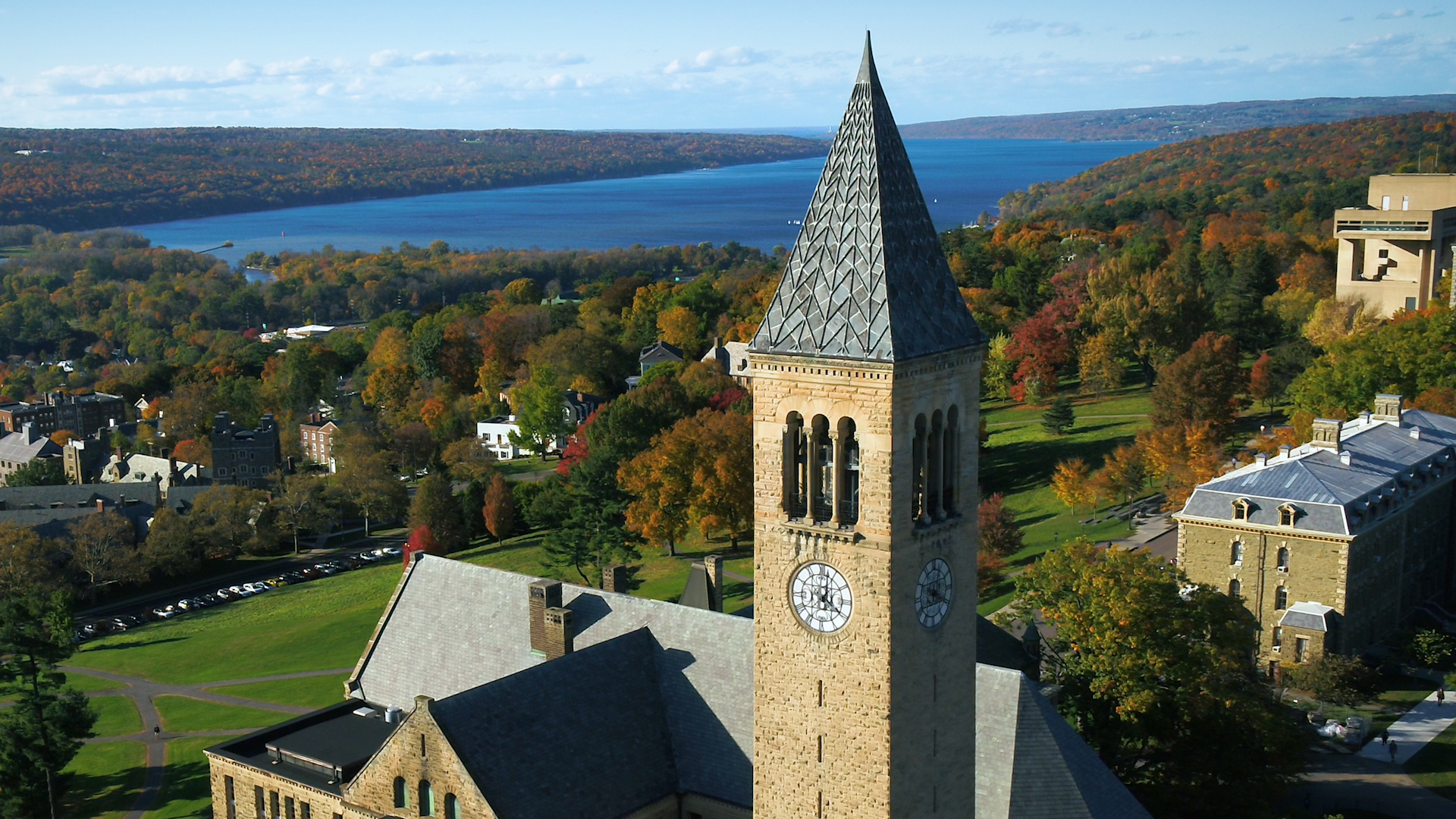 Cornell’s origins trace back to the Morril Act of 1862, which allocated federal land grants to establish institutions focused on agriculture and mechanical arts. Ezra Cornell, a telegraph entrepreneur, and Andrew Dickson White, a historian and diplomat, co-founded the university in Ithaca, New York, with a dual mission: providing accessible education and advancing knowledge through research. Their partnership embodied a progressive ethos, challenging the elite nature of traditional universities by admitting students regardless of gender, race, or socioeconomic background—though early implementation faced limitations due to societal norms of the time.
White’s influence extended beyond academics; he championed secularism in education, advocating for the separation of church and state in university governance. This principle remains relevant today, particularly in debates over academic freedom and institutional neutrality. Cornell’s “Any Person” policy, enshrined in its founding charter, was groundbreaking for its era and continues to resonate in contemporary discussions about equity in higher education. By 2026, these values are being tested anew as Cornell navigates issues such as diversity in admissions, the ethics of AI-driven research, and the university’s responsibility to address global crises like climate change.
The university’s “Ithaca Creed”, adopted in 1911, further codified its commitment to honesty, fairness, and respect, principles that have guided student conduct and institutional decision-making for over a century. In 2026, these creeds are being reinterpreted in the context of digital ethics, sustainability, and social justice, reflecting Cornell’s adaptive approach to preserving its legacy while addressing modern challenges.
Cornell’s origins trace back to the Morril Act of 1862, which allocated federal land grants to establish institutions focused on agriculture and mechanical arts. Ezra Cornell, a telegraph entrepreneur, and Andrew Dickson White, a historian and diplomat, co-founded the university in Ithaca, New York, with a dual mission: providing accessible education and advancing knowledge through research. Their partnership embodied a progressive ethos, challenging the elite nature of traditional universities by admitting students regardless of gender, race, or socioeconomic background—though early implementation faced limitations due to societal norms of the time.
White’s influence extended beyond academics; he championed secularism in education, advocating for the separation of church and state in university governance. This principle remains relevant today, particularly in debates over academic freedom and institutional neutrality. Cornell’s “Any Person” policy, enshrined in its founding charter, was groundbreaking for its era and continues to resonate in contemporary discussions about equity in higher education. By 2026, these values are being tested anew as Cornell navigates issues such as diversity in admissions, the ethics of AI-driven research, and the university’s responsibility to address global crises like climate change.
The university’s “Ithaca Creed”, adopted in 1911, further codified its commitment to honesty, fairness, and respect, principles that have guided student conduct and institutional decision-making for over a century. In 2026, these creeds are being reinterpreted in the context of digital ethics, sustainability, and social justice, reflecting Cornell’s adaptive approach to preserving its legacy while addressing modern challenges.
Timeline of Major Historical Events at Cornell University
Cornell’s history is punctuated by academic breakthroughs, controversies, and moments of societal impact. Below is a structured timeline highlighting key events, their repercussions, and the figures who shaped them. This table underscores how Cornell’s past has repeatedly positioned it at the intersection of innovation and controversy, setting the stage for its role in 2026.
| Year | Event | Impact | Key Figures |
|---|---|---|---|
| 1865 | Founding of Cornell University under the Morril Act; first classes held with 412 students. | Established Cornell as a pioneer in land-grant education, blending liberal arts with practical sciences. Set precedent for coeducation and inclusivity. | Ezra Cornell, Andrew Dickson White |
| 1868 | First female students admitted; Cornell becomes one of the first coeducational institutions in the U.S. | Challenged gender norms in higher education, though early female enrollment faced resistance from some faculty. | Susan B. Anthony (honorary degree recipient), Dean Henry W. Sage |
| 1870 | Establishment of the Sibley College of Mechanical Engineering and Mechanics, one of the first engineering schools in the U.S. | Positioned Cornell as a leader in applied sciences, attracting industry partnerships and shaping modern engineering education. | William Sibley, Ezra Cornell |
| 1872 | First Ph.D. awarded in the U.S. (to Herbert Baxter Adams in history). | Marked Cornell’s commitment to graduate research, elevating its academic prestige and influencing the development of American doctoral programs. | Herbert Baxter Adams, Andrew Dickson White |
| 1901 | Discovery of spiral nebulae by astronomer Heber D. Curtis, later pivotal in the debate over the scale of the universe. | Advanced astronomical research, contributing to the Great Debate (1920) between Curtis and Harlow Shapley on the nature of galaxies. | Heber D. Curtis, Samuel Langley (Smithsonian Institution) |
| 1917 | Cornell’s involvement in World War I research, including the development of mustard gas at the university’s Chemical Warfare Service laboratory. | Highlighted the ethical dilemmas of university-industry collaboration, leading to later debates on research accountability. | Roger Adams (chemist), President Edmund Ezra Day |
| 1945 | Post-WWII expansion with the Guggenheim Aeronautical Laboratory, later renamed the Guggenheim School of Aerospace Engineering. | Solidified Cornell’s reputation in aerospace research, contributing to the Cold War space race and modern aviation. | Theodore von Kármán, Charles Lindbergh (honorary advisor) |
| 1969 | Student protests and occupation of Willard Straight Hall over the Vietnam War, leading to the suspension of 12 students. | Exemplified the tensions between free speech and institutional authority, foreshadowing later movements like Black Lives Matter and #MeToo on campus. | Student activists, President James Perkins |
| 1995 | Launch of Cornell’s first MOOC (Massive Open Online Course), "Introduction to Computer Science", co-developed with Andrew Ng. | Positioned Cornell as an early adopter of digital education, influencing global trends in online learning. | Andrew Ng, Professor David Gries |
| 2015 | Ithaca Commons controversy: Student-led initiative to rename Bear Path after George McGovern (a Cornell alumnus) sparks debate over historical monuments and inclusivity. | Reflected broader campus movements to reexamine historical figures tied to controversial legacies, such as slavery or colonialism. | Student Government, President Martha E. Pollack |
| 2020 | COVID-19 pandemic response: Cornell shifts to remote learning, accelerates telemedicine research, and launches vaccine trials with Pfizer. | Demonstrated Cornell’s ability to pivot in crises, reinforcing its role in public health innovation and remote education models. | Dr. Lisa Miller (dean), Dr. Kwadwo Koram (vaccine research) |
Cornell’s history reveals a pattern of adaptation and reinvention, from its land-grant roots to its current status as a top-tier research university. Each event not only shaped the institution but also reflected broader societal shifts, from the Industrial Revolution to the Digital Age. By 2026, these legacies will continue to influence Cornell
Anticipated Academic and Research Developments by 2026
 Cornell University’s trajectory by 2026 is poised to redefine academic excellence through transformative research, interdisciplinary innovation, and global collaborations. As one of the Ivy League’s most technologically and scientifically driven institutions, Cornell is investing heavily in AI-driven solutions, biotechnological breakthroughs, and climate-resilient technologies. These developments will not only solidify its reputation as a leader in cutting-edge research but also spark debates on ethical boundaries, curriculum evolution, and the future of higher education. Meanwhile, strategic global partnerships will accelerate knowledge exchange, shaping Cornell’s academic direction in ways unseen before.
The university’s commitment to pushing scientific and technological frontiers is evident in its aggressive expansion of research infrastructure, including the Cornell Tech Campus in New York City and the Boyce Thompson Institute for Plant Research. By 2026, Cornell is expected to host some of the most ambitious projects in artificial intelligence, synthetic biology, and quantum computing, with implications for industries ranging from healthcare to sustainable energy.
Cornell University’s trajectory by 2026 is poised to redefine academic excellence through transformative research, interdisciplinary innovation, and global collaborations. As one of the Ivy League’s most technologically and scientifically driven institutions, Cornell is investing heavily in AI-driven solutions, biotechnological breakthroughs, and climate-resilient technologies. These developments will not only solidify its reputation as a leader in cutting-edge research but also spark debates on ethical boundaries, curriculum evolution, and the future of higher education. Meanwhile, strategic global partnerships will accelerate knowledge exchange, shaping Cornell’s academic direction in ways unseen before.
The university’s commitment to pushing scientific and technological frontiers is evident in its aggressive expansion of research infrastructure, including the Cornell Tech Campus in New York City and the Boyce Thompson Institute for Plant Research. By 2026, Cornell is expected to host some of the most ambitious projects in artificial intelligence, synthetic biology, and quantum computing, with implications for industries ranging from healthcare to sustainable energy.
Cutting-Edge Research Projects and Breakthrough Discoveries
Cornell’s research pipeline in 2026 will feature high-profile initiatives that merge theoretical rigor with real-world applications. In artificial intelligence, the university’s Cornell AI Initiative is anticipated to unveil advancements in explainable AI (XAI), focusing on algorithms that can justify decisions in critical domains like healthcare and criminal justice. Researchers are also exploring neuromorphic computing, mimicking the human brain’s efficiency to develop energy-efficient AI systems. The Boyce Thompson Institute (BTI) and Weill Cornell Medicine are expected to collaborate on CRISPR-based gene therapies targeting age-related diseases, such as Alzheimer’s and Parkinson’s. A hypothetical yet plausible breakthrough involves the development of a self-replicating nanobot capable of delivering precise genetic edits to affected cells without off-target effects. This could revolutionize personalized medicine, as illustrated by Cornell’s earlier work on RNA-based therapeutics. > "By 2026, Cornell’s BTI and Weill Cornell Medicine may introduce a CRISPR-Cas14 variant that enables single-base editing in human cells with 99.9% accuracy—a leap forward in correcting genetic mutations linked to hereditary diseases." In climate science, Cornell’s Atmospheric and Space Sciences (A&SS) department is leading efforts to model carbon-negative materials, such as bioengineered algae that absorb CO₂ at unprecedented rates. The Cornell Center for Materials Research (CCMR) is also investigating topological insulators—materials that conduct electricity on their edges while resisting heat loss, potentially revolutionizing energy storage.
Academic Controversies and Ethical Debates
Cornell’s rapid advancements in AI and biotechnology are likely to ignite contentious discussions within academic circles. One major debate revolves around AI ethics, particularly the use of autonomous systems in decision-making. In 2025, Stanford University faced backlash over its AI ethics board after allegations of conflicts of interest among corporate-affiliated members. Cornell is expected to implement stricter oversight committees to prevent similar issues, though tensions may arise between open-access research and proprietary interests from tech giants like Google and IBM, which are major funders. Another flashpoint involves genetic engineering, where Cornell’s work on human germline editing could clash with global bioethics standards. The 2023 He Jiankui controversy—where a Chinese scientist edited the genes of human embryos—highlighted the need for international regulations. Cornell’s Program on Ethics and Technology may propose frameworks for responsible gene editing, but faculty divisions could emerge between those advocating for scientific progress and those prioritizing precautionary principles. Curriculum reforms will also spark debate. Cornell’s College of Engineering is reportedly considering a mandatory AI literacy course for all undergraduates, similar to MIT’s Introduction to Computational Thinking. However, critics argue this could overburden humanities students or devalue specialized degrees. Meanwhile, tenure disputes may arise if faculty resist shifts toward interdisciplinary hiring, as seen at Harvard when computer science professors clashed with traditional humanities departments over resource allocation.
Interdisciplinary Initiatives Driving Innovation
Cornell’s strength lies in its uniquely interdisciplinary approach, blending engineering, social sciences, and the arts to tackle complex challenges. By 2026, initiatives like the Cornell Ann S. Bowers College of Computing and Information Science will deepen collaborations between data science and public policy, addressing issues such as algorithmic bias in law enforcement. One standout program is the Cornell Tech Urban Tech Hub, where architects, urban planners, and computer scientists co-design smart city solutions. For instance, a team may develop AI-powered traffic management systems that reduce congestion while minimizing energy use—a direct application of Cornell’s Transportation Systems Lab research. Similarly, the Johnson Graduate School of Management is partnering with agricultural economists to create blockchain-based supply chains for smallholder farmers in Africa, ensuring transparency and fair wages. The Cornell Center for the Study of Inequality is another hub for cross-disciplinary work, examining how AI-driven hiring tools perpetuate workplace discrimination. By analyzing big data sets alongside sociological theories, researchers aim to design fairer recruitment algorithms, a model that could influence corporate HR policies globally.
Global Partnerships Shaping Cornell’s Academic Direction
Cornell’s research influence will be amplified through strategic international collaborations, particularly in China, Europe, and Africa. By 2026, the university’s Cornell-Tsinghua Joint Center for Environmental Health in Beijing will expand, focusing on air pollution mitigation using quantum sensors. Meanwhile, partnerships with ETH Zurich and Max Planck Institutes will accelerate quantum computing research, leveraging Europe’s leadership in superconducting qubits. In Africa, Cornell’s Feed the Future Innovation Lab for Food Security will collaborate with African Agricultural Technology Foundation (AATF) to deploy drought-resistant crops using gene-editing techniques. Student exchanges under the Cornell-Africa Fellows Program will also rise, with a focus on climate adaptation strategies, reflecting growing demand for African-led solutions in global sustainability efforts. However, geopolitical tensions may complicate partnerships. For example, restrictions on Chinese tech transfers could limit joint AI research, while Brexit-related bureaucracy might slow collaborations with UK institutions. Cornell’s Global Development Program is proactively addressing these challenges by establishing regional innovation hubs in Nairobi, Delhi, and São Paulo, ensuring continuity in research despite geopolitical shifts.
Research Funding Landscape and Allocation Priorities
Cornell’s research engine is fueled by a diverse funding ecosystem, with government grants, private philanthropy, and corporate partnerships playing pivotal roles. Below is a projected breakdown of the top five funding sources in 2026, based on current trends and strategic investments:
| Funding Source | Estimated Allocation (2026) | Primary Focus Areas | Key Examples | |||||||||||||||||||||||||||||||||||||||||||||||||
|---|---|---|---|---|---|---|---|---|---|---|---|---|---|---|---|---|---|---|---|---|---|---|---|---|---|---|---|---|---|---|---|---|---|---|---|---|---|---|---|---|---|---|---|---|---|---|---|---|---|---|---|---|
| U.S. National Science Foundation (NSF) | $450 million | AI ethics, quantum computing, materials science | Cornell’s Materials Research Science and Engineering Center (MRSEC) receives NSF funding for topological insulator research. | |||||||||||||||||||||||||||||||||||||||||||||||||
| U.S. Department of Energy (DOE) | $380 million | Clean energy, nuclear fusion, carbon capture | Collaboration with Brookhaven National Lab on next-gen solar cells. | |||||||||||||||||||||||||||||||||||||||||||||||||
| Private Philanthropy (e.g., Gates Foundation, Bloomberg) | $320 million | Global health, agricultural biotech, urban innovation | Bill & Melinda Gates Foundation funds CRISPR-based crop improvements via BTI. | |||||||||||||||||||||||||||||||||||||||||||||||||
| Corporate Partnerships (Google, IBM, Pfizer) | $280 million | AI hardware, pharmaceutical R&D, cloud computing | IBM Quantum Network grants access to IBM’s quantum processors for Cornell researchers. | |||||||||||||||||||||||||||||||||||||||||||||||||
| International Governments (China, EU, Japan) | $250 million | Student Life and Campus Dynamics in 2026: A Transformative Era at Cornell
Cornell University’s campus in 2026 stands at the intersection of tradition and radical evolution, where student activism, organizational reinvention, and infrastructure upgrades converge to redefine the college experience. By this year, the university has become a microcosm of broader societal shifts—balancing the demands of free speech, social justice, and technological integration while navigating the complexities of modern student life. Historical precedents, such as the 1969 protests against ROTC and racial discrimination, continue to cast long shadows, but the issues of 2026 reflect contemporary urgencies, from AI ethics debates to climate activism. Meanwhile, student organizations, housing initiatives, and mental health programs undergo dramatic transformations, mirroring—and sometimes challenging—national trends. This section explores how Cornell’s campus dynamics in 2026 embody both continuity and disruption, shaping an identity that is distinctly 21st-century yet deeply rooted in Ivy League heritage.
Student Activism and Protests: Free Speech, Justice, and Administrative TensionsThe landscape of student activism at Cornell in 2026 is marked by heightened polarization, strategic alliances, and an unyielding focus on systemic change. Unlike the 1969 protests, which centered on military recruitment and racial equity, today’s movements are fragmented yet interconnected, addressing issues like algorithmic bias in admissions, faculty hiring disparities, and the university’s role in fossil fuel investments. The Cornell Free Speech Debate remains a contentious flashpoint, with clashes between advocates for unrestricted expression and those advocating for "safe spaces" in academic discourse. In 2024, the university implemented a Speech and Expression Policy Framework, which sparked both praise for its inclusivity clauses and criticism for perceived overreach in regulating "hate speech." By 2026, this policy has become a battleground, with student-led legal challenges and administrative pushback over enforcement. Historical parallels abound: just as the 1969 protests led to the dissolution of ROTC, modern activism targets endowments tied to private prisons and demands for diversity quotas in tenure-track hiring. A notable example is the 2025 "Divest Cornell" campaign, which successfully pressured the university to freeze investments in companies linked to human rights violations. Protests in 2026, however, adopt more decentralized tactics, leveraging digital organizing tools like blockchain-based petitions and AI-driven protest route simulations to evade administrative crackdowns. The Student Assembly, once a symbolic body, now wields significant power through binding referendums on policy changes, a direct response to past criticisms of top-down governance."The university’s response to activism in 2026 is no longer about suppression but negotiation—balancing institutional autonomy with student demands for transparency." — Dr. Elena Martinez, Cornell Sociology Department (2026)Key tensions include: Evolution of Student Organizations: Inclusivity, Decline of Traditions, and Rise of Niche CommunitiesBy 2026, Cornell’s 3,000+ student organizations reflect a campus that is both more specialized and more fragmented. Traditional powerhouses like the Cornell Political Union (CPU) and Cornell University Glee Club face declining membership, while esports clubs, sustainability collectives, and AI ethics societies thrive. The shift mirrors national trends: Gen Z’s preference for mission-driven over social clubs and the decline of Greek life (now representing 12% of undergraduates, down from 25% in 2010). However, Cornell’s response is uniquely adaptive, with the administration reallocating funding from underperforming organizations to interdisciplinary "incubator groups" that tackle emerging fields like bioethics and climate tech."The organizations that survive in 2026 are those that blend passion with practical impact—whether it’s a hackathon team building prosthetics or a cultural collective preserving endangered languages." — Cornell’s Office of Student Organizations (2026 Annual Report)Trends in Student Organization Dynamics:
Housing, Dining, and Facilities: Sustainability, Smart Tech, and Controversial UpgradesCornell’s physical campus in 2026 is a testbed for sustainable urban planning, where smart technology and student feedback drive radical redesigns. The 2020-2026 Master Plan prioritizes net-zero emissions, adaptive reuse of historic buildings, and student-driven amenities. However, not all changes are celebrated: controversies over gentrification-like housing policies and AI-managed dining halls have sparked backlash. Key Infrastructure Developments:
|
Leave a Comment
Comments are moderated before appearing. The data you submit is processed according to the Privacy Policy of Findatopdoc.